 Skip to content
Termites cause billions of dollars in property damage across Australia every year and most homeowners never see them coming. These insects work silently inside walls, under floors and within timber framing, consuming your investment from the inside out.
Knowing what a termite looks like is your first line of defence. The earlier you spot the signs, the better your chances of protecting your property before serious damage occurs.
This guide walks you through how to identify termites, understand the difference between species, and recognise the warning signs of termite activity in and around your Melbourne home. You will also learn why a professional termite inspection is the most reliable way to confirm whether your property is at risk.
Whether you are buying an established home, maintaining an investment property, or simply want peace of mind about your current home, understanding what to look for could save you tens of thousands of dollars in repairs.
Why Termite Identification Matters for Melbourne Homeowners
Termites are small, pale insects that live in large colonies and feed almost exclusively on cellulose, the organic material found in timber, paper, cardboard and plant matter. In Australia, they are one of the single biggest causes of structural damage to residential properties.
Unlike most pests, termites rarely emerge into open spaces. They travel through mud tubes, timber voids and underground tunnels, keeping them hidden from plain sight. By the time most homeowners notice something is wrong, significant structural damage has already occurred.
| Melbourne and Victoria are not exempt. Subterranean termites are active throughout Victoria, including in established suburbs and new developments on the urban fringe. Properties near timber, mulch or bushland face a heightened risk, but termites can appear in any Melbourne home. |
Australian homeowners spend an estimated $1.5 billion repairing termite damage each year. The average repair bill runs into the tens of thousands of dollars and most standard home insurance policies do not cover termite damage. The cost falls entirely on you.
A professional building and pest inspection before you buy an established home, or as part of regular property maintenance, is one of the most cost-effective investments you can make. The inspection fee is a fraction of the potential repair bill for structural timber replacement, wall linings, flooring and roof framing.
What Does a Termite Look Like? Identifying the Key Features
Termites are often mistaken for white ants, and understandably so. But knowing the specific physical characteristics of termites can help you distinguish them from other insects and understand what you are dealing with.
Here are the key visual features to look for:
- Body shape: Termites have a broad, soft body with no pinched waist. Unlike ants, there is no narrow segment separating the thorax and abdomen.
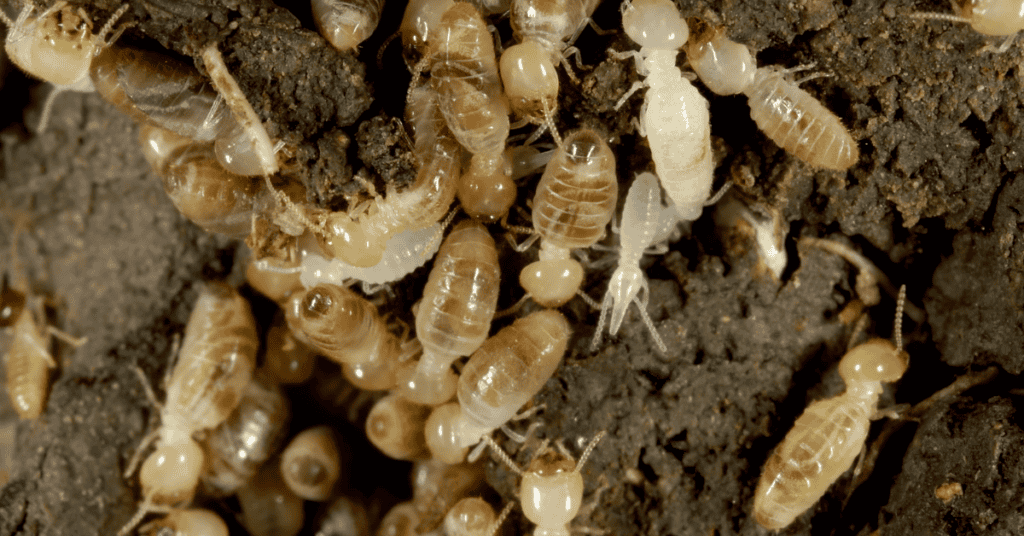
- Colour: Worker termites are typically creamy white or pale translucent. Soldier termites may have a darker orange-brown head. Winged reproductives are often darker brown or black.
- Size: Most worker and soldier termites are 4 to 6 millimetres long. Winged reproductives can be up to 15 millimetres including wings.
- Antennae: Termites have straight, bead-like antennae. Ants have elbowed antennae, which is one of the easiest ways to tell them apart.
- Wings (when present): Reproductive termites have two pairs of wings of equal length. Flying ants have a longer front wing and a shorter rear wing.

If you spot insects matching this description in or around your home, do not disturb them. Note the location and contact Authority Building Inspections for a professional assessment.
White Ants vs Termites: Are They the Same Thing?
The term “white ant” is commonly used across Australia to describe termites, but it is important to understand that white ants and termites are the same insect. The name comes from the pale appearance of worker and soldier termites, which can look superficially similar to ants.
However, termites and ants are not closely related. Termites belong to the order Blattodea (related to cockroaches), while ants belong to Hymenoptera. The confusion matters because some homeowners dismiss what they think are “just white ants” without realising the potential for serious structural damage.
If you find pale, soft-bodied insects in timber, under bark or in soil near your home, treat the discovery seriously and seek professional advice rather than assuming they are harmless.
The Three Main Termite Castes
Termite colonies are highly organised. Each colony contains three distinct castes, and each looks slightly different.
Workers
Workers make up the vast majority of a colony. They are pale, wingless and soft-bodied. Workers are the termites that cause structural damage, consuming timber inside your walls, subfloor and roof framing. Workers avoid light and are rarely seen unless you disturb an active area.
Soldiers
Soldiers defend the colony against predators. They have larger, harder heads than workers, often a distinctive orange-brown colour, with large mandibles (jaw-like mouthparts). Soldiers cannot feed themselves and rely on workers for food. If you find soldiers, an active colony is almost certainly nearby.
Reproductives (Alates)
Also known as swarmers, reproductives are the flying termites that emerge seasonally to establish new colonies. They are darker in colour and have two pairs of wings of equal length. After mating, they shed their wings, so finding discarded wings around windowsills, doors or light sources can be an early warning sign.
Signs of Termite Damage: What to Look For in Your Home

You are more likely to find evidence of termites before you find the insects themselves. Here are the key signs of termite activity to look for during a property inspection or routine home check.
Mud Tubes
Subterranean termites build narrow mud tubes along walls, foundations, stumps and piers. These tubes are about the diameter of a pencil and protect termites as they travel between their underground nest and their food source. Finding mud tubes is a clear sign of active subterranean termite activity.
Hollow-Sounding Timber
Termites consume timber from the inside, leaving a thin outer shell intact. If you tap timber beams, flooring, skirting boards or door frames and hear a hollow sound, termites may be at work inside. You can probe with a screwdriver to check for soft, damaged timber beneath the surface.
Blistering or Buckling Surfaces
Paint or surface linings that are bubbling, blistering or rippling can indicate termite activity beneath. The moisture termites introduce as they work can cause paint and coatings to degrade from behind.
Tight-Fitting Doors and Windows
As termites damage timber framing, the structure of door and window frames can shift. Doors and windows that suddenly become difficult to open or close may point to moisture-related swelling or to termite activity inside the framing.
Discarded Wings and Frass
Finding small wings near light sources, windowsills or door thresholds is a sign that alates have recently swarmed, indicating an active colony nearby. Some termite species also produce small pellet-like droppings called frass near affected timber.
Common Termite Species in Melbourne and Victoria
Not all termites are equally destructive. Understanding which species are common in Victoria helps you assess your risk.
Coptotermes acinaciformis
This is the most destructive and widespread termite species in Australia. Found throughout Victoria, it is responsible for the majority of structural termite damage in Melbourne properties. Colonies can contain hundreds of thousands of individuals and cause extensive damage within 12 to 18 months.
Nasutitermes exitiosus
Commonly known as the mound-building termite, this species creates visible nests in gardens and bushland. While it can damage timber, it is generally less aggressive than Coptotermes species.
Heterotermes ferox
A smaller subterranean termite found in Victoria. While less destructive, it can still cause significant damage to unprotected timber. A licensed pest inspector can identify the species present and assess the level of risk to your specific property.
What Does a Termite Nest Look Like?

Termite nests (also called termitaries) vary significantly by species. In Victoria, most nests are subterranean, meaning they are built underground or within the root crown of trees.
Signs of a nearby termite nest include:
- A large mound of earth near trees, stumps or fences
- Hollow or rotting tree bases with active mud workings inside
- Swollen or distorted soil near foundations or garden beds
- Mud packing inside wall voids, subfloor areas or within timber
Nests can be extremely difficult to locate without specialist equipment. A thermal imaging camera, moisture meter and acoustic detection tools, all used by professional termite inspectors through Authority Building Inspections, significantly improve the chances of finding both the nest and active workings.
Termite Inspection Services: What Is Available for Melbourne Property Owners
Identifying termites yourself is valuable, but it is not a substitute for a professional inspection. Authority Building Inspections provides comprehensive building and pest inspections across Melbourne that include detailed termite assessments.
| Inspection Type | What It Covers |
| Building and Pest Inspection | The most comprehensive pre-purchase inspection. Covers both structural building defects and pest activity including termites. Recommended for anyone buying an established Melbourne home. |
| Pre-Purchase Pest Inspection | Focused specifically on pest activity. Identifies evidence of termites, timber pests and other infestations. Includes a written report detailing findings and recommended action. |
| Practical Completion Inspection | Confirms your new home meets builder specifications before settlement. Can incorporate pest assessments to identify termite-conducive conditions in new construction. |
| Periodic Maintenance Inspection | Regular inspection of an existing property to detect early signs of termite activity before major damage occurs. Recommended annually for properties in higher-risk areas. |
The Real Cost of Skipping a Termite Inspection
Skipping or delaying a pest inspection is one of the most financially risky decisions a Melbourne property buyer can make.
- Standard home insurance does not cover termite damage: Unlike storm or fire damage, termite infestations are considered a maintenance issue. The repair cost falls entirely on you.
- Structural repairs are expensive: Replacing subfloor bearers and joists, wall framing and roof members can cost $20,000 to $100,000 or more depending on the extent of damage.
- Termite damage is not always visible during a standard walkthrough: Without specialist inspection tools, active infestations can be completely missed by buyers.
- An uninspected property is a negotiating blind spot: A professional inspection report gives you documented evidence of termite activity you can use in price negotiations or as grounds to withdraw from a contract.
The cost of a professional building and pest inspection in Melbourne is a fraction of the potential financial exposure. It is a basic risk management step for any Melbourne property transaction.
Best Practices for Melbourne Property Buyers
When buying property in Melbourne, follow these steps to protect your investment from termite risk:
- Book your building and pest inspection as soon as your offer is accepted, before your finance or building inspection conditions expire
- Choose an inspector with proven experience identifying termites in Victoria, as local species knowledge matters
- Ask whether the inspector uses thermal imaging, moisture detection and acoustic tools as part of their process
- Review the inspection report carefully, paying close attention to any active termite workings, evidence of past activity and termite-conducive conditions
- Use inspection findings to negotiate on price or request professional treatment before settlement
- Do not assume a new build is termite-free. Construction debris, soil disturbance and mulch can attract termites to new properties
Warning signs that indicate you need an immediate professional inspection:
|
How Authority Building Inspections Protects Your Melbourne Property
Authority Building Inspections has been protecting Melbourne property buyers and homeowners since 2007. As a family-owned business and member of both Master Builders Victoria and the Housing Industry Association (HIA) for over 20 years, the focus has always been on thorough, independent inspections that give clients real confidence in their property decisions.
All inspectors carry a minimum of 10 years of industry experience. The director brings over 20 years of knowledge to every inspection, giving you genuinely expert eyes on your property.
What sets Authority Building Inspections apart:
- Comprehensive building and pest inspections that go beyond a surface-level walkthrough
- High-resolution photos with detailed comments included in every report
- Same-day or next-day report delivery so you can act within your contract conditions
- Independent analysis with no relationship to sellers, agents or builders
- Melbourne-based team with in-depth knowledge of local termite species and risk conditions
Every inspection follows AS4349.1, the Australian Standard for Inspection of Buildings, ensuring you receive a documented, standardised assessment you can rely on. The Victorian Building Authority (VBA) recommends annual termite inspections for all Victorian properties in susceptible areas.
Frequently Asked Questions
What does a termite look like compared to an ant?
Termites have a broad, soft body with no pinched waist, straight bead-like antennae, and (if winged) two pairs of wings of equal length. Ants have a clearly defined pinched waist, elbowed antennae, and front wings that are longer than the rear wings. Worker termites are also typically pale or creamy white, while most ants are darker.
Are white ants the same as termites?
Yes. White ants and termites are exactly the same insect. The common name “white ant” comes from the pale, soft-bodied appearance of worker termites. Despite the name, termites are not ants. They belong to a completely different insect order. Both terms refer to the same pest and the same risk to your property.
How do I know if my Melbourne home has termites?
The most reliable way to know is through a professional building and pest inspection. Common warning signs include mud tubes on walls or foundations, hollow-sounding timber when tapped, blistering paint, tight-fitting doors and windows, and discarded wings near light sources. However, termites can be present without any obvious signs, which is why professional inspection with specialist tools is important.
How often should I have a termite inspection?
The Victorian Building Authority recommends properties in termite-prone areas be inspected at least once per year. Even for properties in lower-risk areas, annual inspections remain best practice. Regular inspections allow early detection before damage escalates to a costly structural repair.
Does a building inspection include a pest inspection?
Not always. Building inspections and pest inspections are often offered as separate services. Authority Building Inspections offers combined building and pest inspections that cover both structural defects and pest activity in a single visit. This is the most efficient and cost-effective approach for pre-purchase due diligence.
What is the difference between termite damage and rot?
Termite damage typically shows hollow chambers running along the timber grain, often with mud packing inside, while the timber may look intact from outside. Rot (moisture decay) breaks down timber more evenly, producing soft, crumbling or discoloured wood. A professional inspector can distinguish between the two and identify any underlying causes.
Can I treat termites myself?
Over-the-counter termite treatments are rarely effective against an established colony. Without identifying the nest location, treating the entry point alone will not eliminate the problem. Professional treatment by a licensed pest controller, guided by findings from a professional inspection, gives significantly better results.
How much does a termite inspection cost?
The cost varies depending on property size and location. The more important figure is the potential cost of untreated termite damage, which can run into tens of thousands of dollars for structural timber replacement. A professional inspection is a modest, fixed cost that protects your investment. Call Authority Building Inspections on 1800 75 25 85 for a quote.
Protect Your Melbourne Property with a Professional Termite Inspection
Understanding what a termite looks like is the first step, but identifying termites early requires professional eyes, specialist equipment, and genuine experience with Melbourne’s local termite species.
Termite damage is not covered by standard home insurance, and the cost of structural repairs can be devastating. A professional building and pest inspection is the most effective way to know exactly what you are dealing with before it becomes a financial crisis.
Authority Building Inspections has provided thorough, independent building and pest inspections across Melbourne since 2007. Book your inspection today. Call 1800 75 25 85 or visit our building and pest inspection page to arrange your inspection.